Understanding Inductive Alarm Sensors for Variable Area Flow Meters
Originally published on Paper Advance
Reliable Detection. Continuous Protection.
Enhance your variable area flow meter with non-contact alarm monitoring. Inductive proximity sensors can provide alarms for high and low flow conditions. Built to withstand harsh environments and wide operating temperature ranges, they deliver reliable performance with minimal maintenance. Inductive alarm sensors can be installed on most ESKO flow meters during initial setup or retrofitted later as monitoring needs change.
Inductive Proximity Sensor Basics
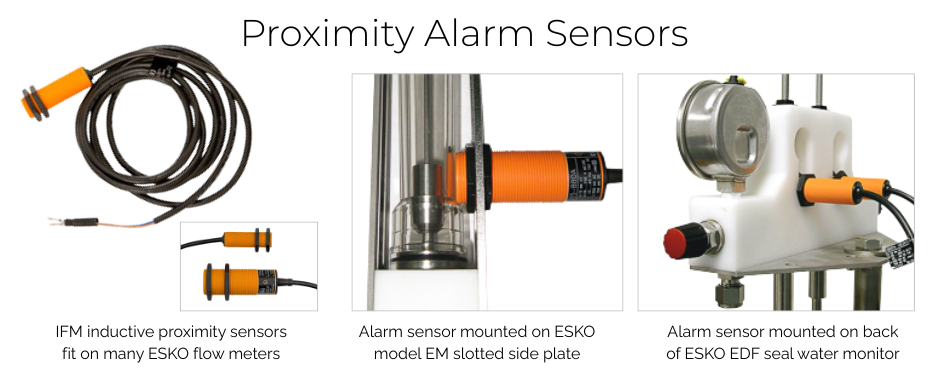
Adding an inductive flow sensor alarm to a flow meter can help maintain consistent flow conditions and provide early warning of flow disturbances. As shown below, alarm sensors are easily attached to side and back plates designed for this purpose.
Understanding Normally Open (NO) and Normally Closed (NC) Sensors
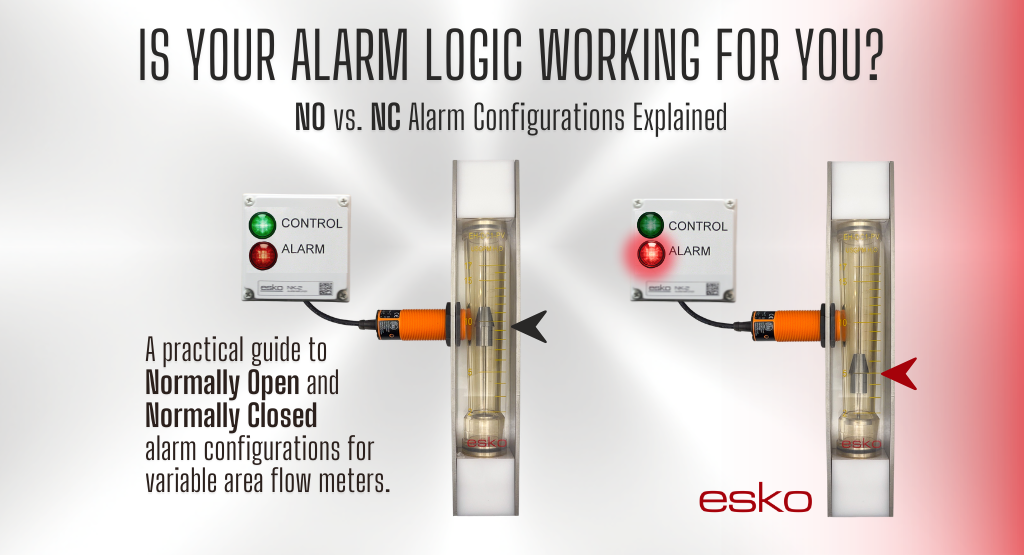
To accommodate different control requirements and preferences, both Normally Open (NO) and Normally Closed (NC) alarm configurations are available. Some alarm sensors are programmable and can be switched to either NO or NC operation if setups are modified after installation.
The preferred alarm logic for a particular style of flow meter will depend on the flow meter design, control system configurations and operator preference. For example, some applications are better monitored with a continuously energized “healthy” output signal, such as a solid green indicator during normal operation, while others may demand a flashing red light to highlight a low flow alarm condition.
Alarm configuration selection may also depend on the shape and position of the float within the flow meter as this affects how well the sensor detects the target.
The two configuration examples below demonstrate typical NO and NC setups; the first one with an elongated float in a seal water monitor and the second one with a typical variable flow meter float shape.
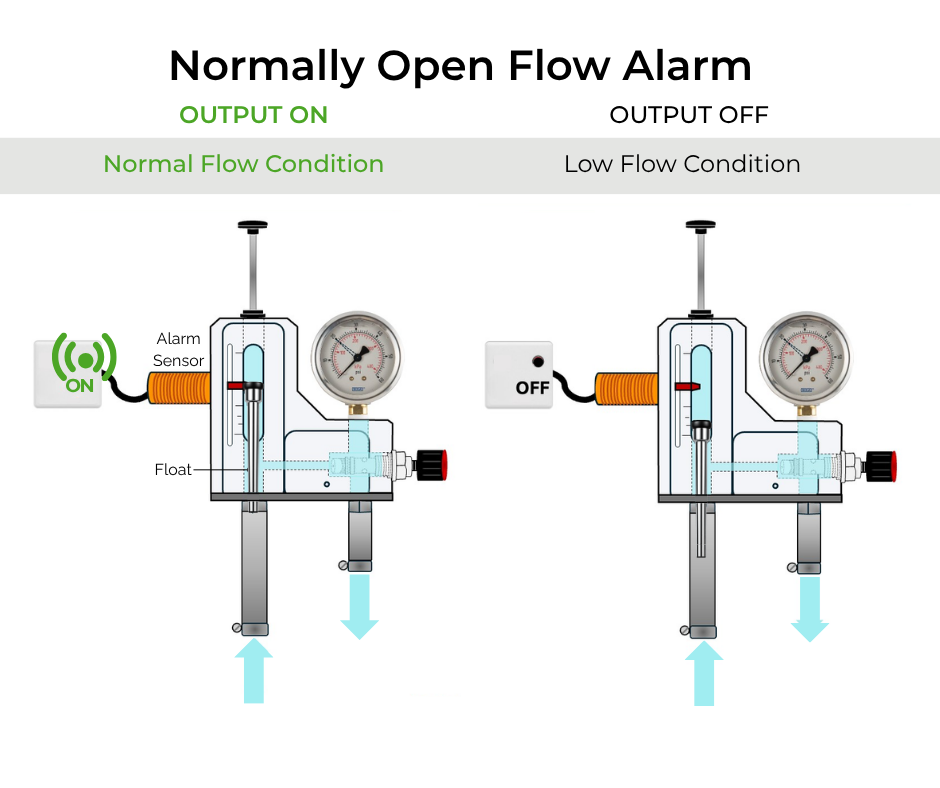
EXAMPLE 1: Normally Open – ‘NO’ type Switch on Seal Water Monitor
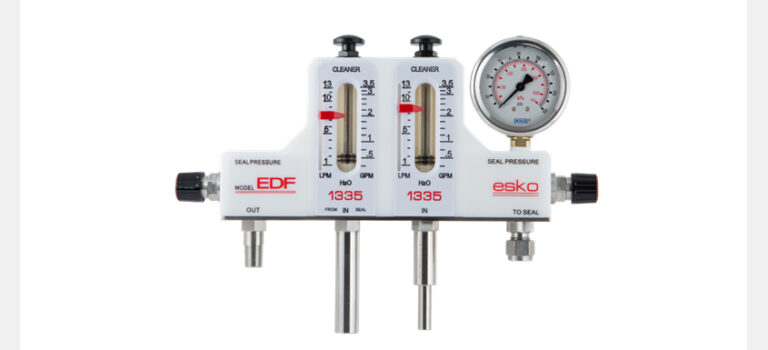
This example demonstrates a typical application in seal water monitoring. The elongated float shape readily supports a continuously energized output signal. This setup provides the operator with continuous confirmation of normal operating flow, critical for lubricating and cooling pump packings and/or mechanical seals.
When the float is within the sensing range, the alarm output remains ON.
If flow drops and the float moves below the sensing point, the alarm output switches OFF.
EXAMPLE 2: Normally Closed – ‘NC’ type Switch on Variable Area Flow Meter
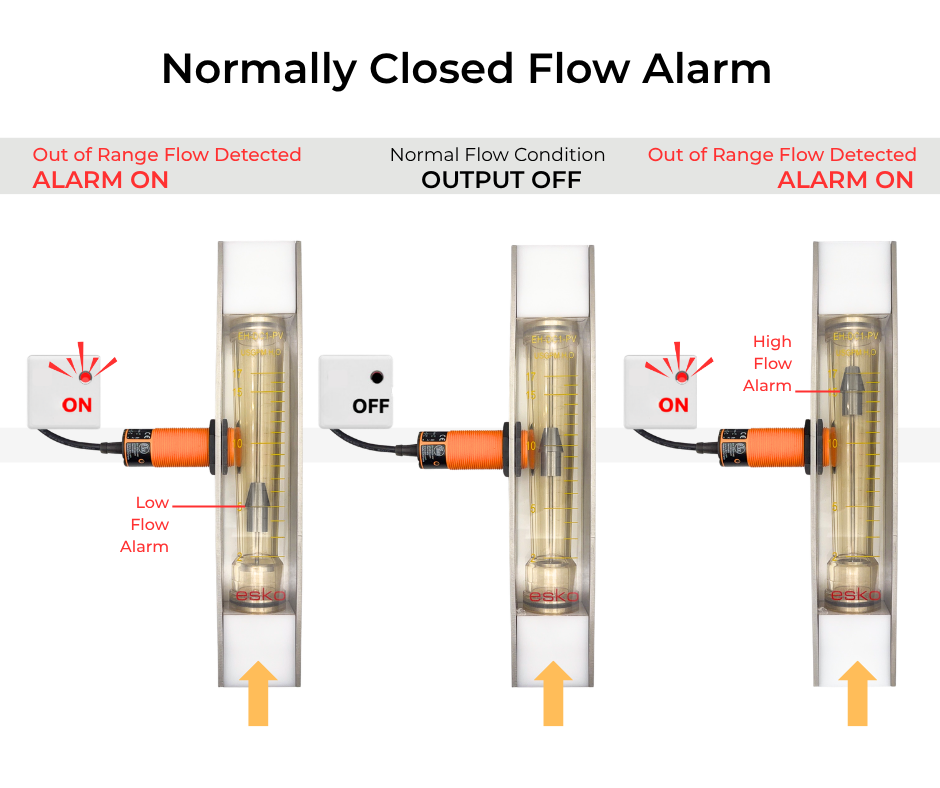
Lower profile floats in other variable area flow meters may require alternate or dual alarm configurations depending on the desired flow indication and control logic.
When the float is within the sensing range, the alarm output remains OFF.
If flow varies and the float moves below or above the sensing point, the alarm activates and the LED indicator turns ON.
Out of Range Flow Condition → ALARM ON
Modular Alarm Options for ESKO Flow Meters
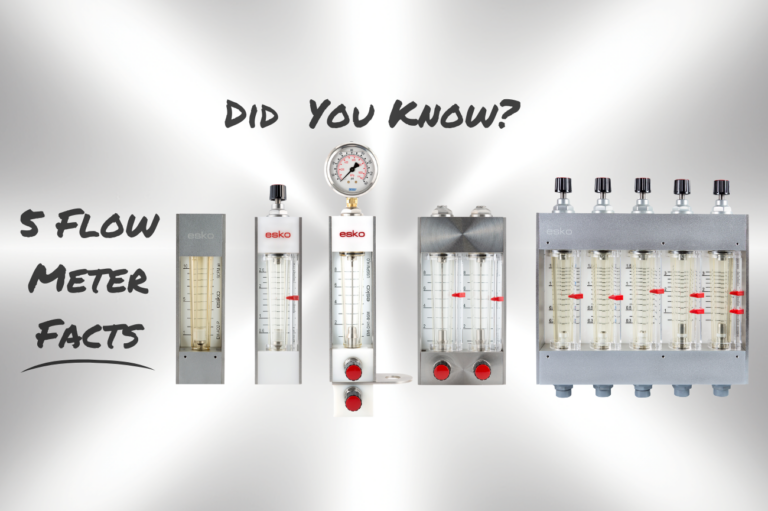
As shown in Figure 4 below, alarm sensors can be fitted at any time onto most ESKO flow meters. Depending on the flow meter type, back, side or bottom installation is possible. ESKO’s modular flow meter designs also allow for multiple alarm configurations for detecting no flow, low flow, or combined high/low flow conditions.

Choosing the Right Flow Meter Matters
ESKO proudly supplies IFM Efector inductive alarm sensors with ESKO manufactured flow meters. All ESKO flow meters are modular, easy to maintain, and backed by expert support. For over 40 years, ESKO Pacific has supplied variable area flow meters, seal water monitors, and lubrication systems to paper mills and industrial facilities worldwide. Need help selecting the right alarm options or accessories for your application? Contact us today to learn more about dependable flow monitoring solutions.